
July 30
Utility vs. Signature Series — Which Fits Your Backyard?
0 comments
Choosing a storage shed is rarely just about square footage. For homeowners across Williamsport, Loyalsock, South Williamsport, and the surrounding Lycoming County communities, the decision often comes down to two very different goals: solving a practical storage problem or adding a structure that genuinely improves the look and value of the property.
If you’re shopping for storage sheds in Williamsport, PA, understanding the differences between available options can help you make a smarter long-term investment. That is why Miller’s Outdoor Living organizes its shed offerings into two clear categories: the Utility Series and the Signature Series.
This guide walks through both series in detail, compares them side by side, and gives you a framework for deciding which one actually fits your backyard, your budget, and your long-term plans. Along the way, we will look at what is happening in the broader outdoor storage market, since national trends often explain why certain features, including insulation, resin construction, and window packages, have become standard requests rather than optional upgrades.
A shed is one of the few structures on a residential property that sits in plain view year-round, yet many buyers still treat it as an afterthought. That is a mistake for two reasons.
First, sheds have become functionally more important. Industry research shows resin and plastic sheds now account for roughly 50 to 60 percent of unit volume in the United States, displacing lower-priced metal units and higher-maintenance wood models because UV-stabilized resin formulations deliver ten to fifteen years of service life with minimal upkeep. That shift reflects a simple truth: homeowners want structures that last, not just structures that store.
Second, sheds are no longer purely utilitarian. Market analysts note a growing gap between basic storage sheds and true outbuilding replacements, as homeowners increasingly want sheds that function as home offices, hobby studios, gyms, or guest sleeping quarters. This trend is driving demand for insulation, electrical pre-wiring, window packages, and interior finish options. This is precisely the line that separates a Utility Series shed from a Signature Series shed.
At a national level, the category is growing steadily rather than explosively. Analysts project the U.S. outdoor storage shed market to expand at a 5.80 percent compound annual growth rate through 2035, driven largely by homeowners expanding their outdoor living spaces. That steady growth, rather than a boom-and-bust pattern, tells you this is a durable, long-term category rather than a passing trend. It also means the sheds being installed today are expected to hold their value and usefulness for years, choosing between Utility and Signature worth careful consideration.
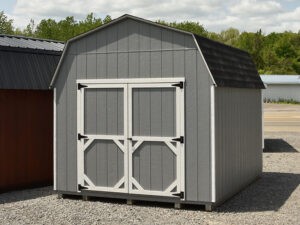
The Utility Series is designed around one question: What do you need to store, and how quickly do you need a reliable place to put it?
These structures prioritize weather protection, straightforward construction, and a price point that makes sense for garden tools, lawn equipment, bicycles, seasonal decorations, and general overflow storage.
Typical Utility Series characteristics include:
This series appeals to homeowners in and around Williamsport who need extra space for mowers, snowblowers, and yard tools but are not looking to make the shed a design centerpiece.
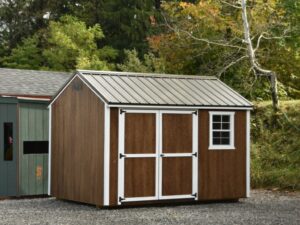
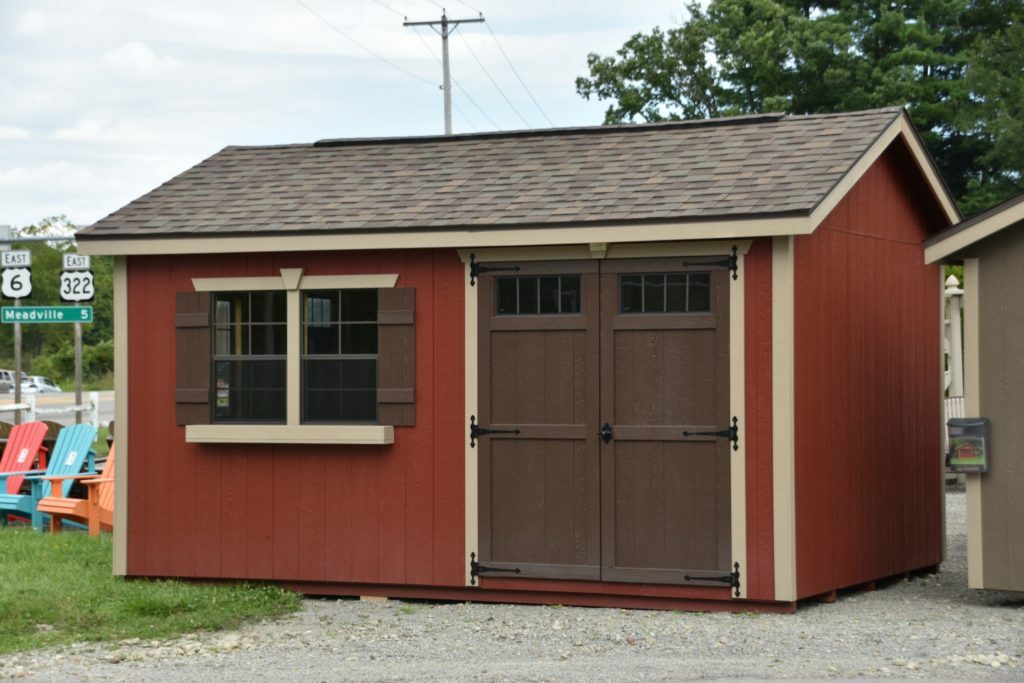
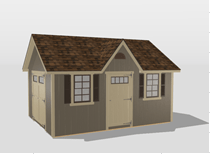
The Signature Series takes a different approach. These structures are designed to look intentional, as though they were part of the property’s original design rather than an afterthought.
Typical Signature Series characteristics include:
Buyers who choose the Signature Series are typically thinking beyond storage. They are planning for resale value, outdoor living space, or a dedicated workshop or hobby area that needs to look finished from every angle.
| Feature | Utility Series | Signature Series |
| Primary Purpose | Tool, equipment, and seasonal storage | Storage plus workshop or multi-purpose use |
| Exterior Finish | Standard siding and trim | Custom siding, trim, and roofline options |
| Windows & Doors | Functional standard sizing | Premium hardware and decorative window packages |
| Interior Options | Basic shelving available | Insulation, electrical rough-ins, workbenches, finished interiors |
| Build Timeline | Generally shorter | Longer due to customization |
| Best For | Practical backyard storage | Homeowners focused on curb appeal and versatility |
| Typical Buyer | Budget-conscious | Long-term investment focused |
| Long-Term Value | Efficient storage solution | Added property value and flexibility |
Neither option is objectively better. The right choice depends entirely on what you are trying to accomplish.
Before comparing prices or browsing catalog photos, answer these four questions honestly.
If the answer is mowers, hoses, tools, and holiday decorations, a Utility Series structure will likely meet your needs.
If you plan to include a workbench, home gym, studio, or office requiring electricity and finished walls, the Signature Series is designed for that purpose from the beginning.
A shed hidden behind a fence has different design requirements than one visible from your deck or the street. Visibility is one of the most common reasons homeowners eventually upgrade from a Utility Series shed to a Signature Series model.
Structures that complement the home’s architecture generally contribute more positively to resale value than purely utilitarian buildings.
This is often overlooked. Municipal codes increasingly treat larger, more permanent structures differently than small utility sheds. Checking setback requirements and permit thresholds with the City of Williamsport or your local township before choosing a size or location can save significant time and expense.
Thinking through these four questions before shopping helps avoid one of the most common regrets: buying based only on today’s budget instead of future needs.
Several industry trends are shaping today’s shed market.
Resin and engineered materials have become mainstream because they resist rot, require less maintenance, and perform well during Pennsylvania’s freeze-thaw cycles.
At the same time, wood remains the preferred choice for premium, design-focused structures because it offers greater flexibility for custom siding, trim, and architectural details.
Homeowners are also using sheds for much more than storage. Dedicated workshops, creative studios, fitness rooms, and home offices continue to grow in popularity, driven by the continued popularity of remote and hybrid work arrangements. If you anticipate these uses, it is worth planning for insulation and electrical rough-ins during construction rather than adding them later.
A Utility Series shed almost always costs less initially, and for many homeowners that is absolutely the right choice.
The more important question is not what it costs today but what you may wish you had chosen three or five years from now.
Many homeowners outgrow a basic shed because storage needs increase or its intended purpose changes. What starts as storage often becomes a workshop, hobby room, or studio. Replacing or heavily modifying a shed later generally costs more than selecting the right structure from the beginning.
This does not mean everyone should choose the Signature Series. It simply means the decision deserves a long-term perspective.
Miller’s Outdoor Living has built its reputation throughout Williamsport and Lycoming County by designing outdoor structures around how families actually live.
Every shed, whether from the Utility Series or the Signature Series, is built with Central Pennsylvania’s weather conditions in mind, from heavy snowfall to humid summers. Every project begins with a conversation about intended use rather than simply choosing a model from a catalog.
The company works closely with homeowners throughout the region to discuss placement, permitting, and design options before construction begins, helping customers avoid costly mistakes and build a structure that truly fits their property.
Not every shed manufacturer understands the specific conditions found throughout Lycoming County.
Heavy snow loads, changing weather, and properties near the Susquehanna River floodplain often require thoughtful planning. Miller’s Outdoor Living considers these regional factors during the design process, which is one of the key advantages of working with a regional specialist instead of a big-box retailer.
If you are still deciding on size, placement, or permitting requirements, speaking with the Miller’s Outdoor Living team can help you understand what works best for both your property and your township.
A Utility Series shed is built primarily for functional storage using standard materials and layouts. A Signature Series shed offers upgraded siding, trim, windows, and interior options, making it suitable for workshops, studios, or other multi-purpose uses.
Permit requirements vary depending on the size of the shed and your township’s regulations. Always check with your local zoning office before construction.
The Signature Series generally contributes more to curb appeal and resale value because it complements the home’s architecture, although a well-built Utility Series still adds practical value.
Yes. Signature Series sheds can include insulation, electrical rough-ins, and finished interior options, making them suitable for workshops, studios, or part-time home offices.
Construction timelines vary based on size, customization, and permitting. Utility Series sheds are generally completed more quickly, while Signature Series projects require additional time because of custom features.
Most homeowners storing lawn equipment, tools, and seasonal items find an 8×10 or 10×12 shed sufficient. Larger uses such as workshops or equipment storage often require a 12×16 or larger structure. The best size depends on both your current needs and how you expect to use the shed over the coming years.
Tags